
The Evolution of Chess Style
Chess strategy is a living history. From Philidor's pawns to the Romantic sacrifices, the Scientific method, and the Hypermodern revolution—every generation stands on the shoulders of the giants before them.
1. Philidor and Pre-Philidor
Philidor believed a mobile mass of pawns is one of the key positional factors in the middlegame. He also believed an attack would fail unless the pawn structure was there to support it. He warned about pawn weaknesses such as isolated, backward, and doubled pawns! He also linked the complementary nature of pawns and pieces (e.g., good and bad bishops) and emphasised the purely positional sacrifice.
📺 Videos: Philidor & Greco Era
- #1 - Philidor
- #2 - Philidor continued
- #3 - Pre Philidor
- #4 - A closer look at Greco
- #5 - A closer look at Greco (2 of 2)
- #6 - Even more Greco!
- #7 - Even more Greco!
- #8 - Greco with the black pieces! Part 1
- #9 - Greco with the Black pieces, Part 2
- #10 - Post Philidor
- #11 - Ego, motivation, personality clash
- #12 - The notion of 'independence'
- #13 - The notion of 'independence' (cont)
2. The Rise of Staunton & The Romantics
Staunton: As well as putting his name to the aesthetic Staunton piece design, we see in his games early experimentation with fianchettos and "overprotection".
Morphy (The Romantic School): Morphy emphasised the power of a direct attack on the King. Factors such as fast piece development provided a strong contrast to Philidor's slower pawn marches. He used gambits to open lines for attack.
📺 Videos: Staunton & Morphy
3. The Scientific Style: Steinitz & Tarrasch

Wilhelm Steinitz (1st World Champion): Realised that direct attacks must be justified by an accumulation of small advantages (e.g., two bishops, better structure, space). He created the "Positional Style".
Siegbert Tarrasch (The Scientific Style): Refined Steinitz's ideas, emphasising piece mobility and space. He taught that structural weaknesses (like an IQP) could be outweighed by piece activity.
📺 Videos: Steinitz & Accumulation Theory
- #19 - Steinitz and 'Modern' Theory
- #20 - Steinitz and 'Modern' Theory Pt 2
- #21 - Impact of The Accumulation Model
- #22 - The Positional Sacrifice
- #23 - Accumulation Theory at work (Game 16)
- #24 - Accumulation Theory at work (Game 18)
- #25 - Accumulation Theory at work (Game 19)
- #26 - Accumulation Theory at work (Game 20)
- #27 - Steinitz vs Chigorin 2nd Match
- #28 - The Steinitz vs Chigorin 2nd Match
- #30 - The Chigorin system in Later Years
- #31 - Chigorin system vs Pillsbury
- #33 - The Rise of Tarrasch
- #34 - The Rise of Tarrasch Part 34
- Roadmap so far
4. The Hypermodern Revolution: Nimzowitsch
The revolt against Tarrasch and "rule-based chess". The emphasis shifted to finding useful exceptions. Aron Nimzowitsch introduced concepts like Blockade, Overprotection, Prophylaxis, and "Restrain-Blockade-Destroy".
📺 Videos: Nimzowitsch & "My System"
- Saemich vs Nimzovich
- Mattison vs Nimzovich
- Johner vs Nimzovich (Restrain!)
- #35 - Overprotection Immortal!
- #36 - Overprotection revisited
- #37 - Pieces instead of Pawns
- #38 - Nimzovich vs Euwe 1929
- #39 - Nimzo vs Mattison
- #40 - Nimzo's draw vs Capablanca
- #41 - Nimzo's win vs Menchik
- #42 - Nimzo's win vs Bogo
- #43 - Nimzo's win vs Saemich
- #44 - Game vs Yates 1929
- #45 - A note about Indian systems
- #46 - Nimzo vs Tartakower
- #47 - Nimzo vs Vidmar
- #48 - Nimzo vs Gilg
- #49 - Nimzo vs Johner
- #50 - Impact of Nimzo's 'My System'
- #51 - Nimzo vs Spielmann
- #52 - Nimzo vs Alekhine Part 1
- #53 - Nimzo vs Alekhine Part 2
5. Lasker & Capablanca: Psychology vs Machine
 Emanuel Lasker
"Style of Styles". Played the opponent using psychology.
Emanuel Lasker
"Style of Styles". Played the opponent using psychology.
 José Capablanca
"The Machine". Accumulation of tiny advantages, flawless technique.
José Capablanca
"The Machine". Accumulation of tiny advantages, flawless technique.
📺 Videos: Lasker, Pillsbury & Capablanca
- #54 - Einstein's intro to Lasker!
- #55 - Lasker defeats Capablanca (1)
- #56 - Lasker defeats Capablanca (2)
- #57 - Lasker defeats Pillsbury 1895
- #58 - Lasker defeats Bauer brilliantly!
- #59 - Rise of Capablanca (vs Bernstein)
- #60 - Capablanca vs Kupchik 1915
- #61 - Capablanca vs Marshall 1918
- #62 - Janowsky vs Capablanca 1916
- #63 - Marshall's brilliant move!
- #64 - Capa vs Treybal
- #65 - Lasker vs Capa (IQP demo)
- #66 - Pawn majority demo (Marshall vs Capa)
- #67 - Reti vs Capablanca
- #68 - Capablanca vs Spielmann
- #69 - Capablanca vs Prof. Fonaroff
6. Alexander Alekhine: "Style as Brilliant as Sunlight"

The 4th World Champion. Known for incredible calculation, complex dynamic attacks, and deep preparation.
📺 Videos: Alekhine's Masterpieces
- #70 - Rise of Alekhine (vs Reti)
- #71 - Alekhine vs Nimzo 1930
- #72 - Alekhine vs Yates 1922
- #73 - Bogo vs Alekhine 1922
- #74 - Alekhine's 5 Queen Game
- #75 - The impact of Krylenko
- #76 - Alekhine's only win vs Lasker
- #77 - Decisive Alekhine vs Capablanca Games
- #78 - Alekhine vs Bogo 1929 match
- #79 - Alekhine's Quadrupled Pawn Game
- #80 - Alekhine vs Bogo, Game 13
- #81 - Alekhine vs Bogo Game 14
- #83 - Alekhine vs Bogo Game 17
- #84 - Alekhine vs Bogo Game 18
- #85 - Alekhine vs Bogo Game 19
- #86 - Game 21
- #87 - Alekhine vs Book
- #88 - Bogo vs Alekhine Game 22
- #89 - One of Alekhine's earliest games
- #90 - Alekhine wins corres tournament
- #91 - An unusual 2nd move by Alekhine
- #92 - A note by Alexander about Style
- #93 - Alekhine vs Bogo Rematch G2
- #94 - Alekhine vs Bogo Rematch G4
- #95 - Alekhine vs Bogo Rematch G9
- #96 - Alekhine vs Bogo Rematch G10
- #97 - Bogo vs Alekhine (Dutch Def)
- #98 - Alekhine vs Bogo 1934 G16
- #99 - Bogo vs Alekhine 1934 G17
- #100 - Bogo vs Alekhine Part 1
- #101 - Bogo vs Alekhine Part 2
7. Euwe, Sultan Khan & Tartakower

Max Euwe: Noted for his logical approach and deep opening knowledge. He popularised chess in the Netherlands and defeated Alekhine.
Sultan Khan: A natural genius who rose from obscurity to beat the world's best with little formal training.
📺 Videos: Euwe, Sultan Khan & More
- #102 - Rise of Euwe (Zurich 1934)
- #103 - How Lasker avoided calcification
- #104 - Max Euwe games 1928
- #104.2 - Euwe with Black pieces
- #105 - Becker vs Euwe
- #106 - Becker vs Euwe (Hack attack)
- #107 - Alekhine vs Euwe (Slav)
- #108 - Alekhine vs Euwe 1935 (G2,3,4)
- #109 - Alekhine vs Euwe 1935 (G7,8,9,10)
- #110 - Alekhine vs Euwe 1935 (G12+)
- #111 - Sultan Khan vs Yates
- #112 - Sultan Khan vs Rubinstein
- #113 - Sultan Khan vs Flohr
- #114 - Alekhine vs Sultan Khan
- #115 - Sultan Khan vs Matisons
- #116 - Sultan Khan vs Marshall
- #117 - Sultan Khan vs Capablanca
- #118 - Ahues vs Sultan Khan
- #119 - Sultan Khan vs Nimzovich
- #120 - Statistical Assessments
- #121 - The wit of Tartakower!
- #122 - More Tartakower games
- #123 - Alekhine vs Euwe 1937 (G1-8)
- #124 - Alekhine vs Euwe 1937 (G10+)
- #125 - Alekhine vs Euwe Rematch
- #126 - Alekhine at 1938 Olympiad
- #127 - Nottingham 1936 Round 1
- #128 - Nottingham 1936 Round 2
- #129 - Nottingham 1936 Round 3
- #130 - Nottingham 1936 Round 4
- #131 - Nottingham 1936 Round 5
- #132 - Nottingham 1936 Round 6
8. The Soviet Domination & Botvinnik School

The Soviet machine placed high priority on the initiative, concrete analysis ("The Scientific Method on Steroids"), and dynamic play (Bronstein, Tal). Mikhail Botvinnik founded the "Soviet School of Chess" which produced champions like Karpov, Kasparov, and Kramnik.
 Botvinnik
1948-1963 (Intermittent). The Patriarch.
Botvinnik
1948-1963 (Intermittent). The Patriarch.
 Tal
1960-1961. The Magician of Riga.
Tal
1960-1961. The Magician of Riga.
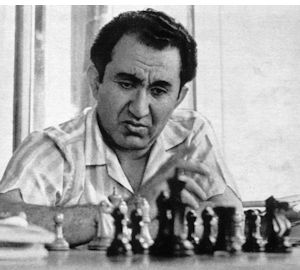 Petrosian
1963-1969. Iron Tigran. Prophylaxis.
Petrosian
1963-1969. Iron Tigran. Prophylaxis.
📺 Videos: Soviet School & Modern Champions
- #133 - Rise of Botvinnik (Capa Simul)
- #134 - The only game Botvinnik lost to Capa
- #135 - Sir George Alan Thomas
- #136 - IQP Blockade backfire
- #137 - Botvinnik's quickest win
- #138 - Botvinnik attacking style
- #139 - Alekhine brilliancy Nottingham
- #140 - Botvinnik brilliancy vs Capa
- #141 - Botvinnik vs Alekhine
- #142 - Botvinnik vs Reshevsky
- #143 - Botvinnik vs Keres (Nimzo)
- #144 - Botvinnik faces a gambit
- #145 - Botvinnik vs Kotov
- #146 - Botvinnik vs Vera Menchik
- #147 - Sultan Khan vs Vera Menchik
- #148 - Vera Menchik vs Euwe
- #149 - Alekhine's Last ever game

World War II (1939-1945): International chess activity largely ground to a halt.
The Computer & Internet Age
Fischer: The Universal Style. Incredible will to win.
Karpov: The Python. Strangulating positional control.
Kasparov: Dynamic Energy. Deep preparation and aggression.
